About Over Head Line cover
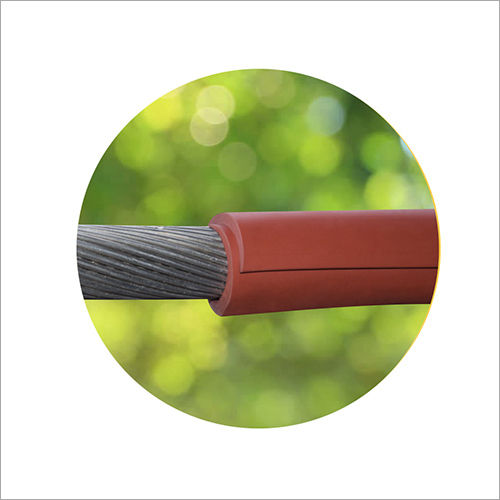
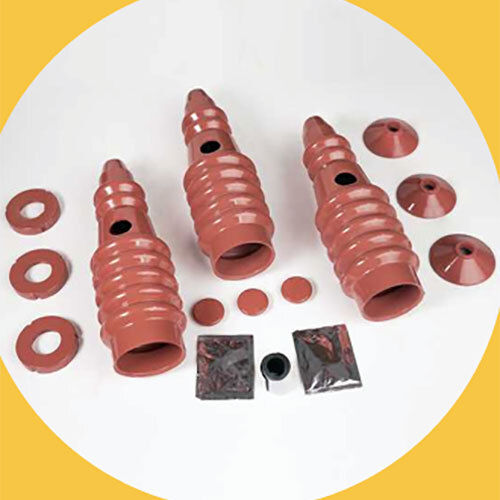
Self-locking Type Silicone Overhead Line Cover is a highly durable protective lining which helps in the prevention of damages to electrical conductors within overhead power line from harsh weather conditions. This flexible sheath is fabricated by using silicone-based synthetic materials that offer high elastic strength and abrasion resistance. It comes in various sizes as per order placed by our customers. Self-locking Type Silicone Overhead Line Cover can also be used in industrial grade electrical systems to cover live wires. Customers can get this electrical insulator as per their requirements with an assurance of fast and safe delivery at a low price
Selection Chart
|
Product Code
|
Application
Range (mm)
|
L (Mtr.)
|
Colour
|
|
EPPC-40
|
Upto 32
|
25.0
|
Red
|
|
EPPC-100
|
Upto 80
|
20.0
|
Red
|
|
EPPC-120
|
Upto 95
|
15.0
|
Red
|
Technical Properties
|
Test Description
|
Typical Value
|
Test Method
|
|
Tensile strength
|
10 N/mm2 (min)
|
ASTM D638
|
|
Elongation
|
350% (Min.)
|
ASTM D638
|
|
Density
|
1.2
|
ASTM D792
|
|
Hardness
|
30 +/-5 Shored D
|
ASTM D2240
|
|
Water Absorption
|
0.5% (Max.)
|
ASTM D570
|
|
Low Temp. Flexibility (-20 C for 4 Hrs.)
|
No Cracking
|
ASTM D2671
|
|
Accelerated Ageing
|
150 C for 168 Hrs.
|
ASTM D2671
|
|
Tensile strength
|
7 N/mm2 (min)
|
ASTM D2671
|
|
Elongation
|
250% (Min.)
|
ASTM D2671
|
|
Continuous Operating Temp.
|
-20 C to 105 C
|
IEC 216
|
|
Volume resistance
|
1x10 (13) Volume Resistance 1x10 Ohm.cm (Min.)
|
ASTM D149
|
|
Di-electric Strength
|
130 kV/cm (Min.)
|
ASTM D2303
|
|
Tracking and Erosion Resistance
|
No Tracking or Erosion to top surface or flame failure after 1 Hr. at 2.5 kV, 1 Hr. at 2.75 kV 1 Hr. at 3.0 kV, 20 min. at 3.25 kV
|
ASTM D4325
|
Engineered for Reliable SafetyOur Over Head Line Cover is specifically developed to provide robust insulation for overhead power lines, reducing the risk of accidental contact. The high dielectric strength of over 18 kV/mm and V-0 flammability rating add extra assurance of electrical and fire safety, making these covers a critical component in both urban and rural power transmission systems.
Versatile Installation and MaintenanceWith a manual installation process, our covers can be easily fitted or removed using standard safety gear and accessories like clips or ties. They are suitable for both permanent and temporary line protection assignments. Regular inspections are recommended to maintain optimal mechanical integrity and ensure long service life of up to five years under proper storage conditions.
FAQ's of Over Head Line cover:
Q: How does the Over Head Line Cover help enhance electrical safety?
A: The cover provides insulation to overhead power lines, preventing inadvertent contact and reducing the risk of electrical accidents. Its smooth, non-conductive, and flame-retardant surface ensures a safer environment for workers and the public.
Q: What materials are used in the Over Head Line Cover and how do they improve performance?
A: The product is made from high-grade PVC with polymeric insulation, ensuring high dielectric strength, excellent weather resistance, and a self-extinguishing flame rating. These qualities combine to offer robust protection against electrical faults and environmental conditions.
Q: What is the installation process for this cover?
A: Installation is carried out manually using appropriate safety equipment. The flexible cover can be clipped on or wrapped around line conductors, with clips or ties as needed. It is designed to ensure ease of fitting and removal, making maintenance straightforward.
Q: When should Over Head Line Covers be inspected or maintained?
A: To maintain their effectiveness, periodic inspections for mechanical integrity and signs of wear are recommended. Checking regularly ensures prompt replacement or repair if needed, optimizing electrical safety on power lines.
Q: Where can these covers be used and for which voltage ranges are they suitable?
A: They are ideal for use on electrical distribution lines with voltages up to 11 kV, and compatible with conductor sizes between 10 mm2 and 150 mm2. Typical applications include power transmission lines in utility and industrial settings across India.
Q: What are the primary benefits of using this product for power transmission lines?
A: Key advantages include enhanced personnel safety, protection against accidental contact, high weather and UV resistance, thermal insulation, compliance with IS/IEC safety standards, easy installation, and a long operational shelf life.
 We'are Open: Mon - Sat 10:00 AM - 7:00 PM






 Send Inquiry

 Send Inquiry
 Send Inquiry
 Send SMS
 Call Me Free


